
The 7 points
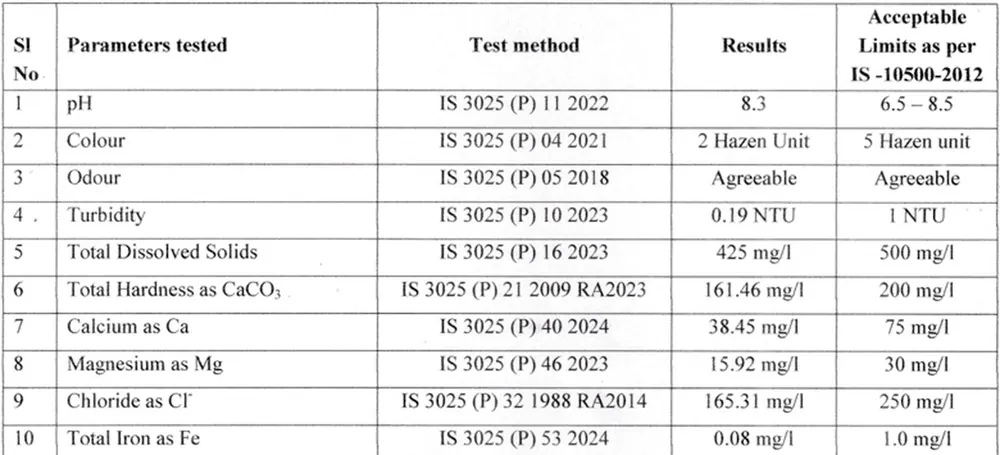
1. The grade matches your water
SS304 for normal Kerala well water. SS316 for hard, iron-rich, cloudy or high-TDS water, confirmed by a lab test when in doubt.
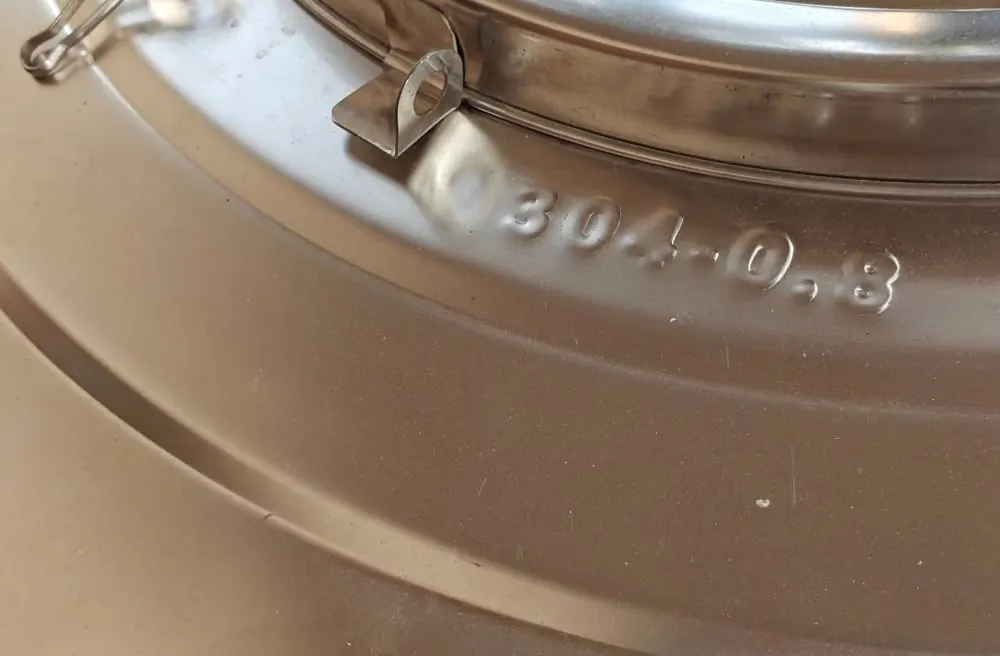
2. Grade and thickness, pressed into the steel
Look on the top dish, beside the lid: 304-0.6 or 304-0.8, pressed into the metal. The grade and sheet thickness, in writing that can’t peel off.
3. The bottom is fully curved
A rounded dome that slopes to the valve. Open it and the water drains out completely. Flat bottoms leave corners for sediment.
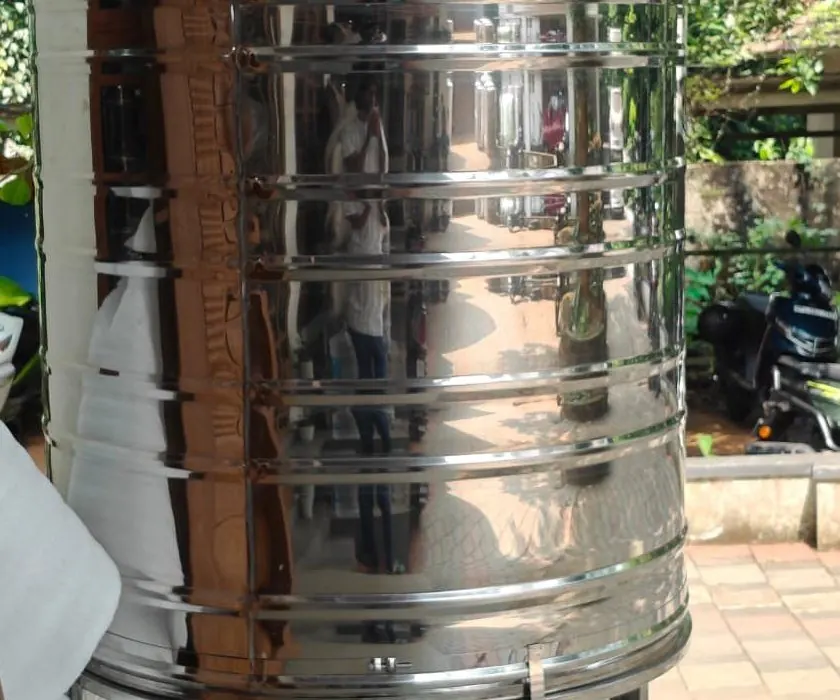
4. Ribbed body, polished inside
Closely spaced ribs give the body its strength. The inside of every tank is polished.
5. A steel stand, not GI
The stand is the same thick SS304 as the tank and can be fixed to the slab. GI stands rust. Count the legs: 4 on a 1,000 L, 5 on a 1,500 L, 6 on a 2,000 L.
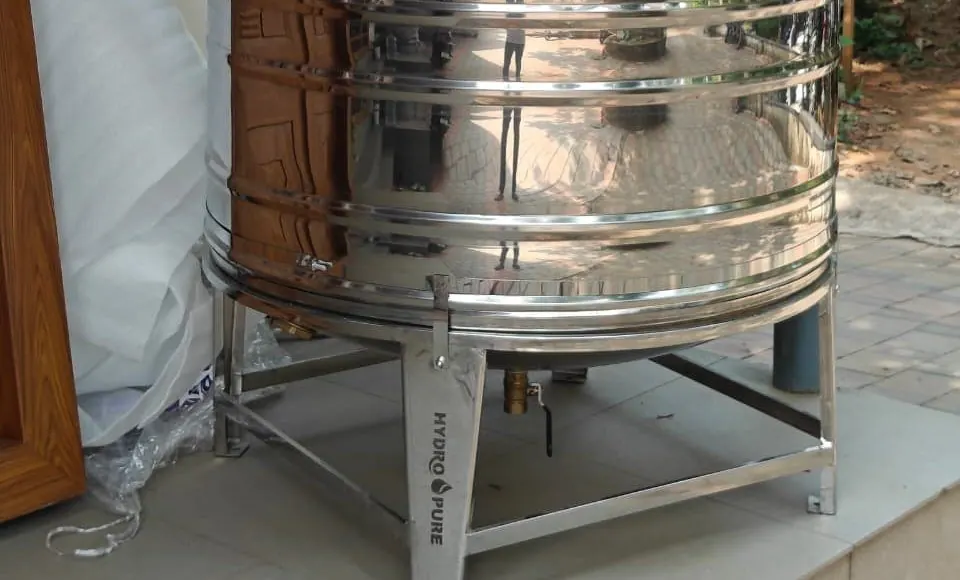
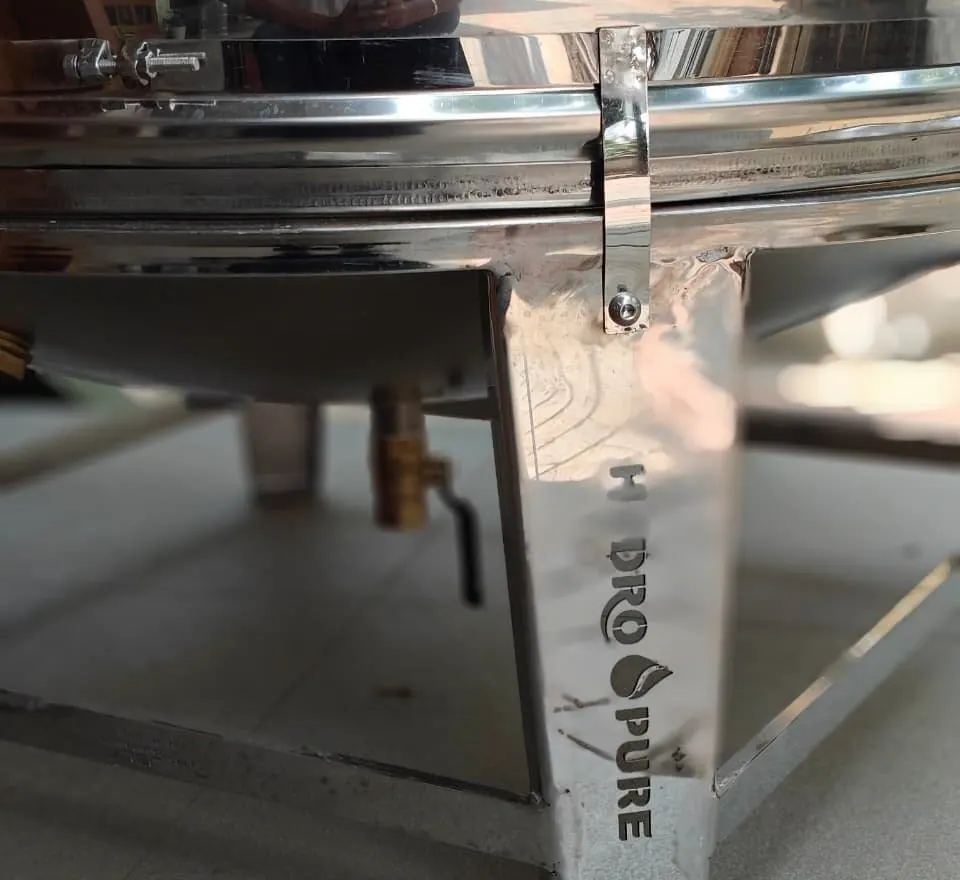
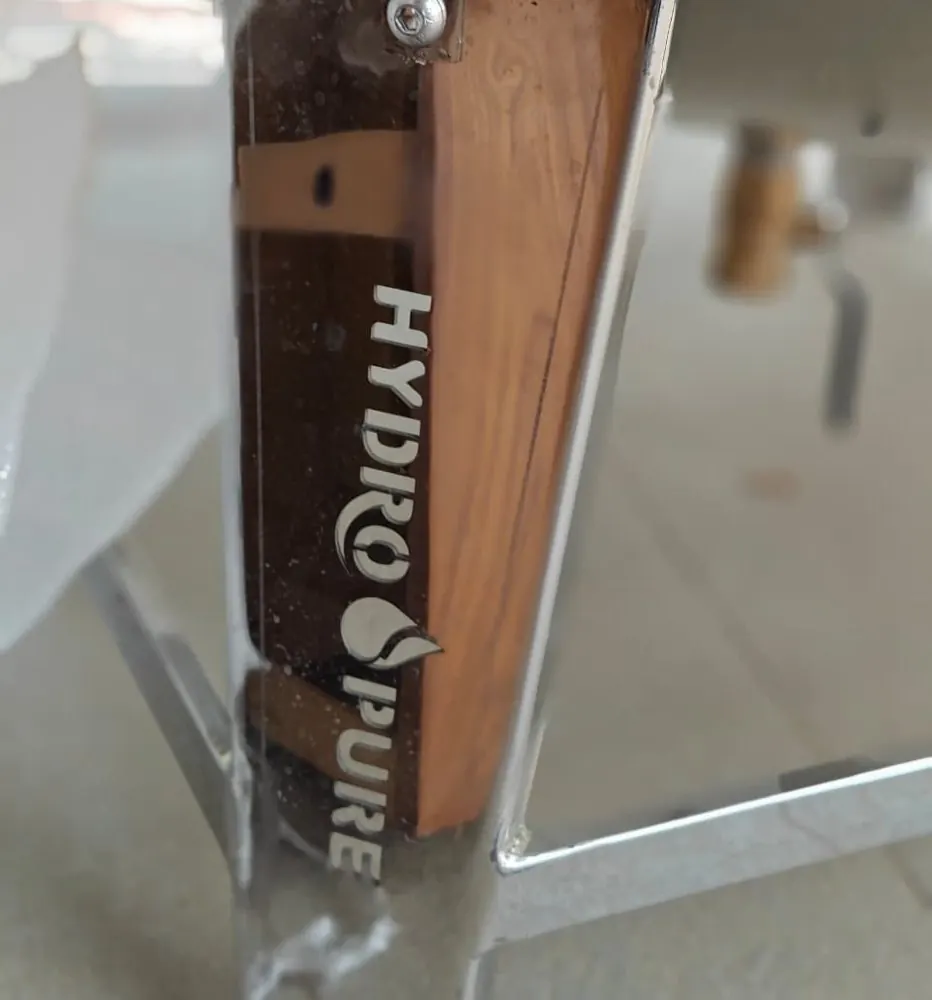
6. It’s an original, not a duplicate
HydroPure is engraved on one leg of the stand, and the grade and thickness are pressed into the top. Find both and you know it’s genuine.
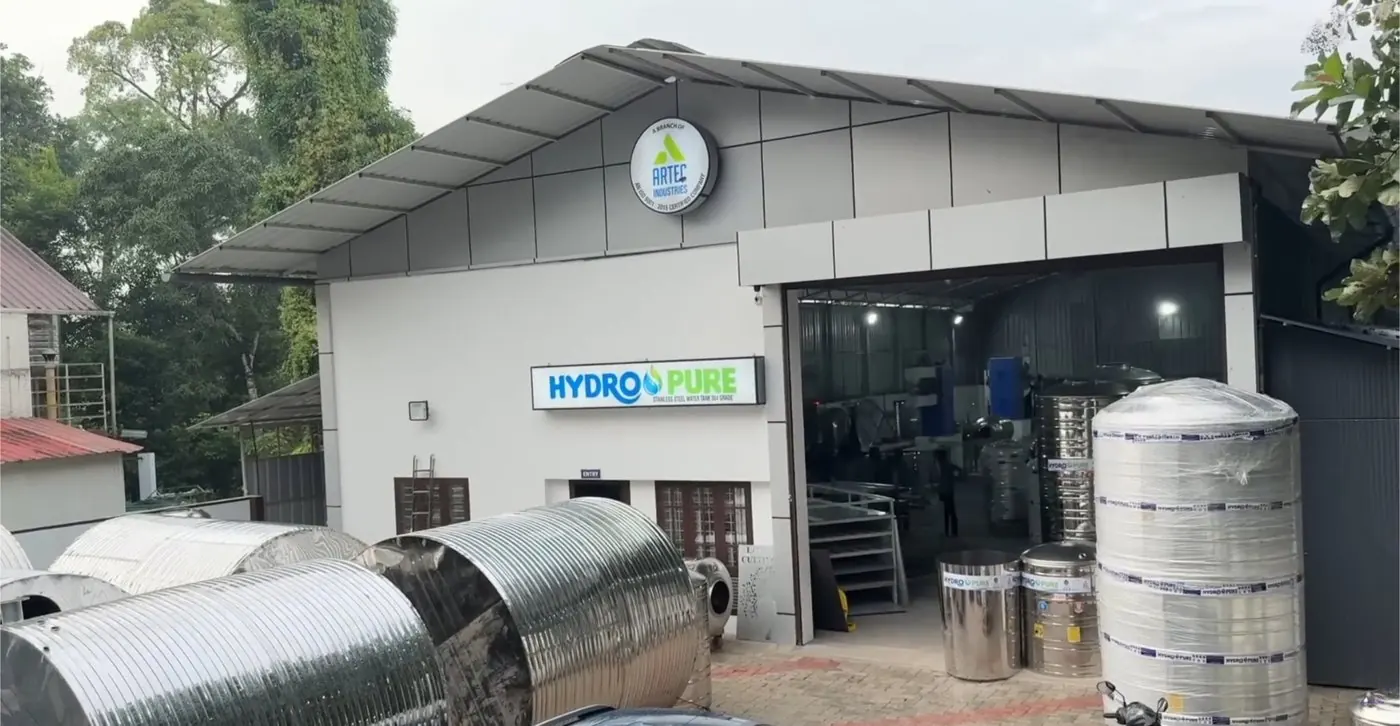
7. Made where you can visit
Made in Perumbavoor, Kerala, in an ISO-certified unit. Come and see the steel, the sheet and how every tank is made.
Questions
How can I tell the sheet thickness?
On a HydroPure tank, the grade and thickness are pressed into the top dish beside the lid, for example 304-0.6. On other brands, ask the seller to show you where it is written on the tank itself, not only on a label or invoice.
Why does a curved bottom matter?
A fully curved bottom slopes to the valve, so water and sediment drain out completely when you clean the tank. Flat bottoms leave corners where dirt settles.
Why not a GI stand?
GI stands can rust over time. A HydroPure stand is made of the same SS304 stainless steel as the tank.